
By Ameya Satam
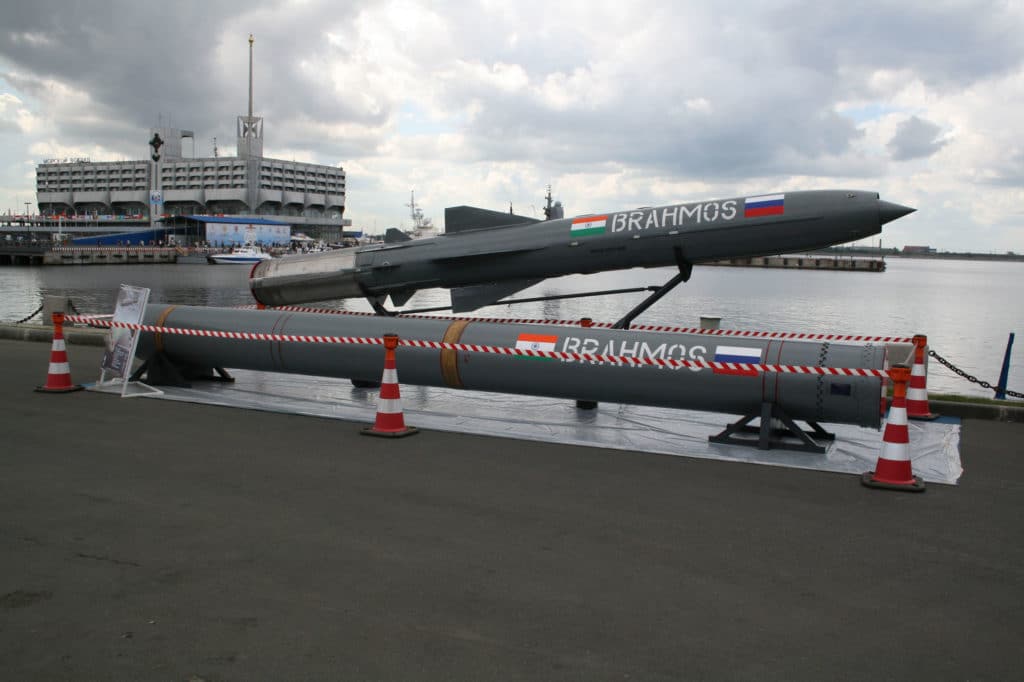
In the current times, Modern Military Technology has gained a significant importance in today’s geopolitics due to its capability in influencing the geopolitics through the medium of defense cooperation. Various nations have recognized its importance and have started taking steps to make themselves stronger in their defense sector through it. India has also started taking firm steps in the defense sector by doing investments and motivating the engineers to develop new modern defense technologies like DRDO’s ROV Daksh, INS Vikrant, and the BrahMos Missile System – supposedly one of the most talked defense technology in the current geopolitics of Asia.
Atmanirbhar Bharat and Make in India Benefiting the India’s Defence Cooperation
The Initiatives of Atmanirbhar Bharat and Make in India are truly guiding the Indian talents in the field of defense technology because the talented people are now getting enough fund to research and develop new defense technologies like DRDO’s ROV Daksh, INS Vikrant, and the BrahMos Missile System. These developments of new defense technologies are not only securing the Indian borders but also, they are creating the true “Atmanirbhar Bharat” and “Make in India” initiatives successful. Moreover, it is also increasing the scope of defense cooperation strategy for India. As India has plans to expand its defense cooperation with other countries not only through military exercises but also by exporting its own advanced defense equipment and systems. For this purpose, India has expanded its defense budget from ₹2.53 lakh crore in 2013-14 to ₹6.21 lakh crore in 2024-25. For now, India is exporting defense equipment to over 100 countries, and France, USA, and Armenia are the top buyers among them. Till now, India has exported various types of defense equipment and systems which include aircrafts, helicopters, boats, and torpedoes. A significant development is observed in the defense exports which was ₹686 crore in 2013–14 has reached ₹21,000 crore in 2023–24. After such observation in the growth of defense exports, the government of India has aimed to increase its defense exports to ₹3 lakh crore by 2029 and ₹1 lakh crore in defense exports by 2035.
Leadership Vision
The Indian Defense Minister Rajnath Singh has underlined that India is changing its image from a defense importer to becoming a defense exporter which associates with PM Modi’s 2047 vision of a self-reliant and globally leading India. Currently, the BrahMos missile has grabbed special attention to succeed in this ambition which is also representing India’s technological maturity and strategic confidence.
BrahMos and Southeast Asia: Expanding Strategic Influence:
India - Philippines
The BrahMos exports have brought new opportunities for India’s defense diplomacy in the Southeast Asian region. First opportunity for India has been brought by the Philippines; it has signed a $375 million deal with India in 2022 for three batteries of BrahMos coastal defense systems. India started the deliveries of BrahMos in April 2024, and currently, the Philippines is waiting for more in the process of its Horizon 3 modernization plan. The Missile Technology Control Regime (MTCR), however, restricts India from trading missiles with ranges that exceeds 300 km including BrahMos to non-member nations as India is already a member nation of MTCR.
The rising dominance of China through repeated encounters by the Chinese coastguards in the South China Sea region has provoked the Philippines to procure the BrahMos Missile system. The stationing of the BrahMos supports the Philippines to increase its capability to face China with better defense technology and this has also been stamped as India’s strategic entry into the Indo-Pacific Region’s security framework.
India - Indonesia
At present, a $450 million BrahMos deal for Indonesia is in the discussion and is going ahead progressively. This deal for Indonesia is more important for its maritime security as it geographically covers the key chokepoints of Malacca, Sunda, and Lombok Straits. The increasing incursions by the Chinese side in its Exclusive Economic Zone has motivated Jakarta to import BrahMos for including its Minimum Essential Force (MEF) modernization program. This deal will help India to nourish defense cooperation and its regional influence.
India-Vietnam
After Indonesia, Vietnam is on the way to final a deal of $700 million with India for BrahMos missiles. This deal is important for Hanoi because it will benefit to foster the maritime defense of it and will support the goal of it to counter China’s maritime expansion. According to analysts, this will boost India's strategic partnership with Vietnam.
India-Malaysia
In the line, Malaysia has also expressed its interest in the air-launched variant, BrahMos-A, which is suitable for its Russian-origin Sukhoi Su-30 MKM fighters. If this interest converts into a deal, then Malaysia will be able to strengthen its aerial strike efficiencies in the maritime missions of South China Sea.
Conclusion
Together, these deals position India as an emerging key defense partner in Southeast Asia, counterbalancing China’s assertiveness and building collective resilience among Indo-Pacific democracies. While BrahMos exports strengthen India’s regional standing, they also invite discussions on maintaining stability amid growing defense modernization in Southeast Asia. India’s expanding defense cooperation through the BrahMos program not only boosts its technological reputation but also redefines its strategic role in ensuring an open, stable, and balanced Indo-Pacific.
Ameya Satam is a post-graduate in International Relations from Sikkim University, Gangtok. The views expressed in the above piece are personal and solely those of the author. They do not necessarily reflect the views of Kalinga Institute of Indo-Pacific Studies.

KIIPS is a premiere think-tank that intends to provide a platform to academics, researchers, scholars and experts from across the country and abroad.