
By Tran My Hai Loc
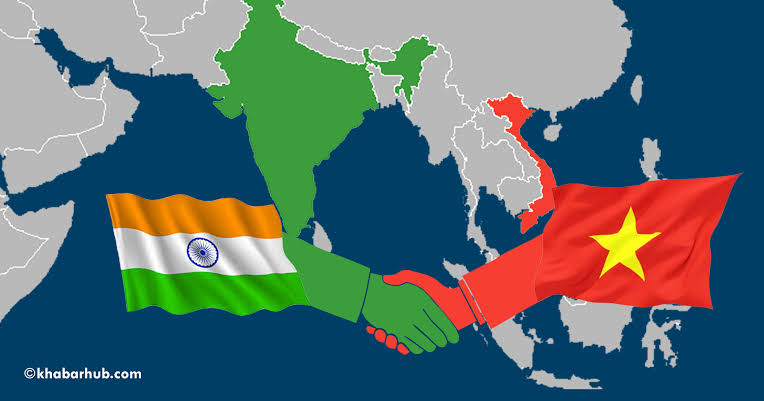
Vietnam and India have developed a long-standing friendship grounded in shared Buddhist heritage, solidarity during national liberation struggles, and decades of political trust. This foundation has supported the steady expansion of bilateral ties, culminating in the 2016 upgrade to a Comprehensive Strategic Partnership (CSP). Since then, cooperation across politics, economy, defense, culture, and people-to-people exchanges has grown, though not always at a pace commensurate with both countries’ aspirations. And, Vietnam is always considered a key partner in India’s Act East Policy, MAHASAGAR Vision and vision of the Indo-Pacific.
Significant achievements Comprehensive Strategic Partnership (CSP)
CSP between Vietnam and India has achieved substantial success across all key pillars, reinforcing strategic trust and fostering tangible cooperation. Politically and diplomatically, the two countries maintain convergent strategic interests, especially regarding regional stability, maritime security, and support for ASEAN centrality. Vietnam and India consistently coordinate at the UN, ASEAN-led mechanisms, and other multilateral forums. High-level visits including those by leaders, ministers, and parliamentary delegations have reinforced strategic trust.
Economically, India and Vietnam maintain positive economic and trade relations. In addition to the Joint Trade Sub-Commission, the Joint Working Group on agriculture, health, information technology, etc., the two sides also hold exchanges on trade and economic cooperation in their respective sectors. Bilateral trade reached $14.82 billion in India’s 2023–2024 fiscal year, with projections of $15.76 billion for 2024–2025, reflecting enhanced supply-chain links and their mutual interests in high-growth sectors like renewable energy and IT. Vietnam benefits from a significant trade surplus in its trade ties with India, with exports reaching $9.06 billion.
In defense and security, the relationship is secured by foundational documents like the “Joint Vision towards 2030” and the “Memorandum of Understanding on Mutual Logistics Support”, complemented by India's provision of training, naval ship visits, and a $500 million line of credit to Voetnam for defense procurement. Vietnam supports India’s growing role in maintaining maritime security and its policy to uphold rule of law in the South China Sea. Despite these gains, however, Indo-Vietnam cooperation still leans heavily toward training and dialogue.
Furthermore, cooperation in science and technology between Vietnam and India has advanced strategically in recent years with a focus on high impact areas, most notably peaceful nuclear applications and cybersecurity. This shift reflects a maturing relationship prioritizing future strategic needs. India is committed to supporting Vietnam in establishing a Nuclear Science Center, which includes the provision of a new research reactor facility. This is a significant commitment aimed at enhancing Vietnam’s capabilities in basic research, training, and the practical application of atomic energy in medicine (such as producing radioisotopes for cancer treatment).
Simultaneously, collaboration in cybersecurity has become a priority, acknowledging the increasing threat from non-state actors in non-traditional security arenas. Significantly, this cooperation extends beyond mere dialogue to include joint efforts to combat cybercrime and build Vietnam's institutional capacity, leveraging India's vast expertise in the IT sector. India has come forward to support Vietnam's national digital transformation agenda. These advanced initiatives signal a commitment to strategic technological partnership that yields economic and security benefits for both countries.
Finally, cultural and people-to-people links are underpinned by a strong foundation, notably the philosophical connect between the two countries through Buddhism. Moreover, India provides support for preserving Vietnam’s cultural heritage, including the restoration of the Mỹ Sơn Sanctuary. Activities such as tourism, academic exchanges, and youth programs have expanded, yet their current scale remains modest relative to their potential.
Limitations and Prospects Comprehensive Strategic Partnership
The period from 2016 to 2020 demonstrated clear achievements in the CSP between India and Vietnam, yet simultaneously the period exposed inherent limitations that constrained its full potential. While political and diplomatic engagement reached a consistently high level, the implementation of numerous cooperation agreements often proceeded at a slow pace, sometimes lacking the strategic depth and innovative content required to meaningfully transform the relationship.
In the critical economic domain, the results achieved were consistently disproportionate to the immense potential of both rapidly growing economies. A primary challenge stemmed from India's trade protectionist policies, with several key export items of Vietnam being placed on the 'sensitive' or 'exclusion' lists under the ASEAN-India Trade in Goods Agreement, hindering market access. This was compounded by significant non-tariff barriers, including poor physical infrastructure, slow administrative procedures, a complex legal environment, and high transaction costs. Consequently, economic and technological initiatives advanced incrementally rather than strategically.
Furthermore, while defense and security ties expanded remarkably, primarily through capacity building, training, and lines of credit, they largely remained at the government-to-government level. The relationship struggled to transition into deeper forms of cooperation, such as joint research and development or meaningful defense industrial co-production.
Meanwhile, people-to-people links, though robustly founded on shared cultural heritage like Buddhism, faced persistent connectivity barriers, including limited direct flights and low public visibility of each other's cultural products.
As both countries now enter pivotal new phases of development, India pursuing its vision of a “Developed Nation” by 2047 and Vietnam's “Era of Nation’s Rise”, the future trajectory of the CSP demands a strategic recalibration. This requires a shift from signing framework documents to focused, outcome-based execution, particularly by leveraging India’s strengths in IT, digital technology, and high-tech manufacturing to complement Vietnam’s supply chain and industrial needs, thereby forging a stronger, more substantive strategic synergy
In the coming period, the India-Vietnam relationship will continue its trajectory of stability, consolidation, and expansion. Strategic priorities are focused on maritime security, defense industry, trade and investment, science and technology, and people-to-people exchanges. Ultimately, achieving a true strategic breakthrough will depend on successfully navigating two critical challenges: the commitment to remove institutional barriers and improve infrastructure connectivity, and the delicate task of harmonizing the level of success with India's strategic considerations in its relations with other partners. Both nations must proactively address these constraints to realize the full potential of their deeper cooperation.
Tran My Hai Loc is Faculty of International Relations at Ho Chi Minh City University of Economics and Finance, Vietnam. The views expressed in the above piece are personal and solely those of the author. They do not necessarily reflect the views of Kalinga Institute of Indo-Pacific Studies.

KIIPS is a premiere think-tank that intends to provide a platform to academics, researchers, scholars and experts from across the country and abroad.