
By Sumit Kumar
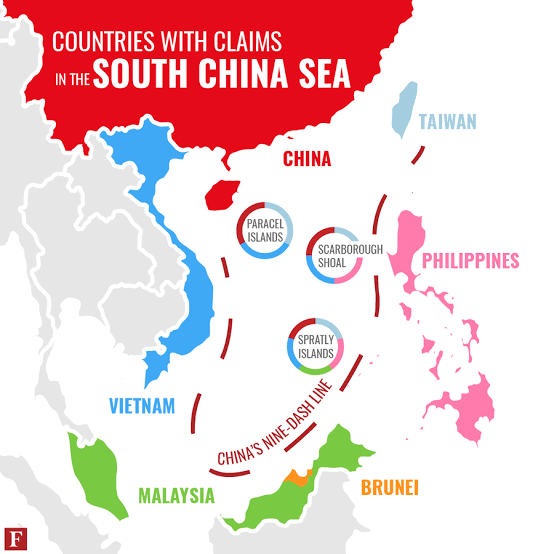
China's use of ‘grey zone warfare’ in the Indo-Pacific has arguably emerged as the region's most pressing challenge today. China's grey zone strategy of deploying its maritime militia (fishing boats) to act like civilians but operate for Beijing as secretive agents, and using this tactic as a subtle yet aggressive strategy in the Indo-Pacific. And these boats not just block but also disturb other countries’ ships, especially in the South China Sea. The US is not staying silent- it is sending its navy, building alliances like QUAD and AUKUS, and helping smaller countries like the Philippines and Vietnam stand up to Chinese aggression. The article highlights how this situation is a concern even without open war. Accidents, confusion, and rising tensions could lead to a major war in the future. This requires a smart, calm, and cohesive act, involving not only military force but also diplomacy, surveillance, and collective action and support.
Situation Overview
Indo-Pacific is one of the most important sea zones in the world, and many countries have calculated interests in the region, including India, China, Japan, Australia, and the US. Chinese claims over the South China Sea violate international law. The Chinese have contested claims over islands to chase off any other country that tries to enter. The US wants the region to be free, open and secure freedom of navigation. The US supports joint naval exercises and uses QUAD to maintain regional peace. The region is now a pressure point not at war, but not fully at peace either.
Key Developments
From 2012 onwards, China has built an artificial island within the South China Sea and has been patrolling all around with militia boats. Even after 2016, an international court ruling has sided with the Philippines, yet China continues to ignore the lawful claims of other countries. Filipino and Vietnamese ships also faced harassment from China’s militia during 2020– 2024. The US, Japan, Australia, and India increased joint naval drills by 2023–2025. The satellite data shows a rising militia presence near disputed waters. The current situation is tense, with China pushing and continuing grey zone tactics the US responding by increasing surveillance, alliances, diplomatic support, and other countries feel pressure.
The Nature of Threat
China’s grey zone warfare is dangerous because: “civilian disguise” (Non-Military) looks like a normal fisherman to avoid direct conflict, but builds pressure constantly. Responding to militia boats is legally complex- they look like civilians but act like military.
This creates confusion, accidents, or even unplanned war, and small countries feel insecure and isolated. There’s a high risk of military accident, which can pull big powers (Like the US and India) into conflict.
Possible Measures to Counter Grey Zone Tactics
To counter China’s gray zone tactics, a likewise multi-dimensional strategy is needed to strengthen regional resilience and limit China's ability to operate below the conflict threshold.
∙ Show satellite images and videos that prove China’s militia tactics to the world.
∙ Use AI surveillance for tracking and predicting militia activities.
∙ Strengthening calculated partnerships QUAD (India, US, Japan and Australia) and AUKUS (Australia, United Kingdom and United States).
∙ Training and funding regional coast guards, such as the Vietnamese and Filipino coast guards, to take on these militia boats
∙ Clear communication rules should be made to stop confusion between the navies and civilian boats.
∙ Expose China’s tactics publicly at the global level, show the satellite images and videos, and reports to show the world how China is using militia for pressure
∙ Use advanced technologies, including AI, drones, and radar, for tracking and predicting militia activities in real time.
∙ QUAD, AUKUS and other ASEAN-based operational coalitions should also work towards regular exercises to create a joined-up vision and strategy (not just exercises), with India, a premier Indo-Pacific power, playing a greater role. And the US should avoid any trade-related high tariffs on India, as such tensions can weaken strategic trust and unity.
Conclusion
Grey zone warfare is not a real war, but it is still a real threat. China is using quiet tricks to expand control in the Indo-Pacific region. Militia, misinformation, and coercion move the lines without open war. The US response should be planned. The US must conduct military exercises with its key partners in the Indo-Pacific, share intelligence, and guard support together, and expose China's tactics at global level. Deterrence is calling out the wrongdoing and standing together strong, avoiding conflict while keeping the peace. The US should build economic, diplomatic and military arrangements with all trusted partners who share the vision of a secure and peaceful Indo-Pacific region, including Japan, Australia, the other ASEAN states especially India, a partner who shares with the US the vision of a free, secure, threat-free and peaceful Indo-Pacific region. Avoid disputes related to trade, tariff, and diplomatic relations with India, a trusted partner in the region to counter China, as these could weaken the partnership. Such issues could harm the unity needed to counter China's growing aggression. Security in the Indo-Pacific won’t come from one country acting alone. It will come from unity, clarity, and courage together.
Sumit Kumar is a postgraduate in International Relations from Jawaharlal Nehru University. The views expressed in the above piece are personal and solely those of the author. They do not necessarily reflect the views of Kalinga Institute of Indo-Pacific Studies.

KIIPS is a premiere think-tank that intends to provide a platform to academics, researchers, scholars and experts from across the country and abroad.