
By Shiwani Dumbala
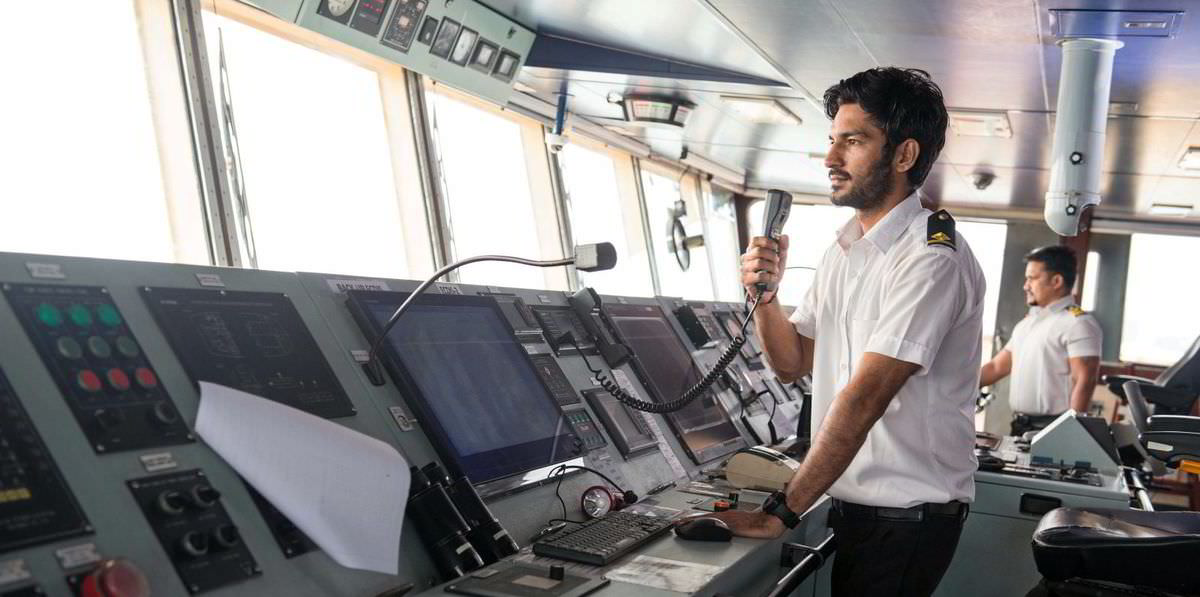
Maritime power has traditionally been understood through the ability of states to control, secure and utilise the sea. And the naval fleets, merchant vessels, ports and infrastructure occupy a central place in assessing the maritime strength. Yet, this framework often overlooks an essential component of maritime capability: the people who operate ships- Seafarers. The growing risks faced by Seafarers in the Red Sea, Black Sea and Strait of Hormuz demonstrate that maritime security is increasingly shifted towards the security of those who carry the global shipping. This raises a larger question for India: “Can maritime power be understood only through the capabilities of ships, ports and navies, or should it also include the human security, especially safety of Seafarers? Significantly, for India, this human dimension of maritime security deserves particular attention as the country has emerged as one of the world’s largest sources of Seafarers. In 2026, India became the world’s second largest supplier of seafarers contributing 3,11,936 maritime professionals (12.16% of global Seafaring workforce which doubled since 2015). The government launched “Mission 20%” aiming to increase India’s contribution to 1/5th of Global workforce of Seafarers. While this is an employment and skill-development opportunity, it can also become a strategic asset for India.
With recent developments in West Asia and in Strait of Hormuz, the lesson is clear that when maritime routes become contested, insecurity does not stop with ships or cargo but it reaches the people operating them. In 2026 Hormuz crisis, thousands of Seafarers were stranded in the region which required many bilateral and international efforts for their evacuation. The safety of Seafarers has particular implications for India because Indians constitute a large globally dispersed maritime workforce. They operate on foreign flagged vessels and frequently transit strategic choke points far beyond Indian territorial waters. During the Hormuz crisis, the Directorate General of Shipping advised against deploying Indian seafarers in vessels transiting the strait and also government announced plans for real time monitoring of Indian Seafarers irrespective of flag of the vessels, vessel location and destinantion, crew, cargo, voyage and security conditions. These measures represent a shift from viewing Seafarers primarily through lens of employment to regulation and recognition of their exposure to strategic risks. However, it is also important for India to recognise maritime human capital as a component of maritime power.
The Philippines, as the world’s largest supplier of Seafarers, has developed a sound institutional ecosystem around training , certification and welfare. On the other hand, Singapore integrates maritime skills and workforce development into its broader strategy of global maritime hub. The lesson for India is not to replicate these models but to recognise that a large maritime workforce becomes strategically valuable when training, welfare, technological skills and institutional support are integrated into a broader maritime strategy.
India’s rapidly expanding Seafarers provide a comparable strategic opportunity, but it should go beyond just producing larger personnel and should focus on training Seafarers to make them equipped to face an increasingly complex maritime environment, marked by by geopolitical tensions, cyber threats, autonomous technology misuse, climate change and grey zone threats. India, therefore needs a broader maritime human security framework.
The existing mechanism under Directorate General of Shipping should be integrated with Ministry of External Affairs and Indian Missionary Abroad, so that assistance to Seafarers will be rapid and clearly coordinated. Real-time monitoring should become a permanent mechanism of risk assessment rather than responding only under crisis. “Mission 20%” should focus not just on numbers but also on advanced competencies in cyber security, autonomous shipping, crisis management and leadership. Indian Seafarers, working on foreign-flagged vessels, should have clearer access to emergency communication, consular assistance, evacuation support and legal assistance when operating in conflict prone zones. Finally, Indian Seafarers themselves should be treated as a source of information and knowledge. Their experience of exposure to international ports, sea lanes, regulation and risks can provide meaningful inputs to India’s Maritime policy makers. This does not mean turning Seafarers into an intelligence network. Rather, India should create institutional channels through which Seafarers’ maritime experience can contribute to policy formulation and risk assessments.
India’s chairship of the BRICS Seafarers’ Forum 2026 in Mumbai already points in this direction. The Forum adopted the Mumbai Declaration 2026 along with specific resolutions on the protection of seafarers in areas of armed conflict, combating crew abandonment, and strengthening enforcement of the Maritime Labour Convention. These outcomes reflect a growing recognition that the safety and dignity of seafarers must form an integral part of India’s broader maritime and foreign policy engagement, particularly within Global South platforms such as BRICS.
India’s emergence as the world’s 2nd largest supplier of Seafarers provides it with a global maritime presence that extends well beyond its territorial waters. In 21st century maritime order, Seafarer is not simply a worker aboard but is also a carrier of skills, knowledge and India’s economic presence across the world’s oceans. Recognising Indian Seafarers as part of this distributed maritime presence would allow India to understand maritime power not simply as capacity to command the sea, but also as the capacity to participate in and shape maritime order.
Shiwani Dumbala is a research scholar in Department of Maritime Security, Central University of Gujarat. The views expressed in the above piece are personal and solely those of the author. They do not necessarily reflect the views of Kalinga Institute of Indo-Pacific Studies.

KIIPS is a premiere think-tank that intends to provide a platform to academics, researchers, scholars and experts from across the country and abroad.