
By Dr Lauren Dagan Amoss
Operation Sindoor did not constitute a formal change in India’s nuclear doctrine. Rather, it reflects the recalibration of the strategic relationship between nuclear stability and conventional punishment. For decades, India–Pakistan relations have been analyzed through the lens of the stability–instability paradox, according to which nuclear weapons reduce the likelihood of an all-out war while enabling the continuation of lower-level violence, including proxy warfare and cross-border terrorism. Operation Sindoor, however, suggests a deliberate Indian effort to turn nuclear stability into a condition that enables conventional punitive actions.
This article analyses Operation Sindoor through four central claims: the absence of a formal change in India’s nuclear doctrine, the shift toward deterrence by punishment, the use of multi-dimensional coercion, and the emergence of a crisis-instability mechanism.
1. Nuclear Doctrinal Continuity as a Strategic Backstop
Although major India–Pakistan crises are often assumed to generate changes in nuclear doctrine, Operation Sindoor points to continuity. India did not abandon its doctrine, announce a new nuclear threshold, or engage in nuclear brinkmanship. Indian decision-makers were clearly aware of the dangers of nuclear-level misperceptions, as reflected in the Indian Air Force’s swift denial of the rumor that India had struck a nuclear facility in the Kirana Hills. This denial was intended to prevent deterioration into “use it or lose it” pressures and preserve escalation control.
Moreover, India’s official language, which described its actions as “responsible” and measured, was designed to frame the use of force as bounded, limited, and controllable. In this respect, India’s nuclear doctrine functioned not as an instrument of public coercion but as a stabilizing strategic backstop that enabled the expansion of space for conventional punishment.
2. From Strategic Restraint to Deterrence by Punishment
The most significant shift in Operation Sindoor was the move from the language of strategic restraint to the operational logic of deterrence through punishment. For decades, Pakistan has benefited from a nuclear shield that allowed it to employ proxy violence on the assumption that India would remain constrained in its response. Operation Sindoor did not eliminate this logic, but it reduced its effectiveness by signalling that there is space for calibrated punishment below the nuclear threshold.
This shift occurred in two dimensions. First, at the conceptual level, India signalled that state-sponsored terrorism would no longer be treated as a sub-conventional challenge insulated from inter-state punishment. In doing so, it blurred the distinction between a non-state actor and the state that sponsors or enables it. The purpose of deterrence became more punitive, with limited elements of coercion, aimed at reshaping the cost structure of proxy violence in the region.
At the operational level, India avoided the use of ground forces that might have triggered concerns regarding Pakistan’s tactical nuclear weapons (such as the Nasr missile). Instead, India relied on stand-off warfare, including air power and precision-guided munitions, while maintaining implicit nuclear red lines, such as avoiding attacks on civilians and nuclear facilities. In this way, India reduced the immediate operational relevance of Pakistan’s nuclear weapons.
3. Multi-Dimensional Coercion: Military, Economic, and Cognitive Domains
Operation Sindoor went beyond the narrow military domain and should be understood as an instance of multidimensional coercion, combining military, geo-economic, and cognitive instruments.
In the geo-economic domain, the most dramatic step was India’s suspension of the Indus Waters Treaty, an institution that had long served as a durable stabilizer in India–Pakistan relations. This move signalled that domains previously insulated from crisis politics are now available as instruments of coercion, especially given Pakistan’s structural dependence on the Indus Basin for agriculture and energy. It also demonstrates how the logic of nuclear deterrence can be partially bypassed by shifting pressure to adjacent domains.
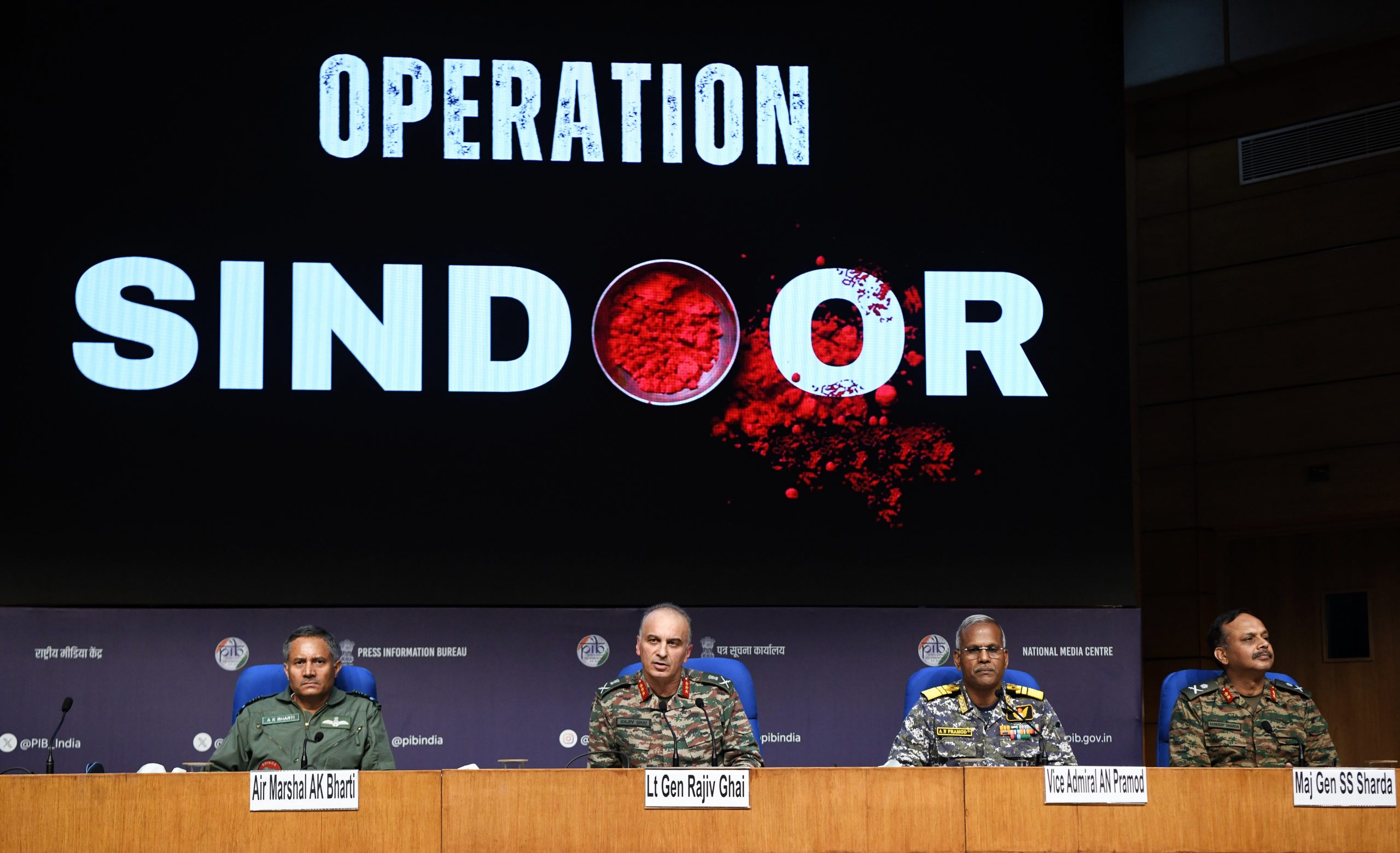
In the cognitive and symbolic domains, India moved quickly to frame the operation in moral terms by linking the name “Sindoor” to the widows of the victims of the Pahalgam attack. This framing provided the operation with domestic legitimacy and presented it externally as justified moral punishment rather than escalatory adventurism. The narrative did not merely accompany coercion; it helped to constitute its credibility.
4. The Emergence of a Crisis-Instability Mechanism
Although Operation Sindoor demonstrated that a nuclear environment still leaves space for significant punitive action, the shift toward public deterrence by punishment also generates a crisis instability mechanism. Once punitive responses are considered legitimate, made public, and morally framed, the room for maneuver available to future decision-makers becomes narrower.
This process has several dangerous consequences. First, future Indian leaders will face higher audience costs if they choose restraint, making non-responses politically expensive. Second, the initiative may shift toward militant organizations, which may time future crises in the expectation that a major attack will almost certainly trigger an Indian response. Finally, repeated punitive responses may institutionalise a logic of iterative deterrence, in which short-term credibility is preserved at the cost of long-term flexibility in crisis management.
Conclusion
Operation Sindoor did not remove India–Pakistan relations from the nuclear shadow, nor did it eliminate the rivalry’s structural instability. Instead, it redefined how coercion is organized beneath the nuclear ceiling. By combining a stable nuclear backdrop with assertive conventional punishment across several domains, India has enhanced the immediate credibility of its deterrence.
However, this recalibration incurs a high strategic cost. This may make future confrontations more rigid, coercive, and far harder to contain.
Dr Lauren Dagan Amoss completed her PhD in Political Science and Government from Bar-Ilan University The views expressed in the above piece are personal and solely those of the author. They do not necessarily reflect the views of Kalinga Institute of Indo-Pacific Studies.

KIIPS is a premiere think-tank that intends to provide a platform to academics, researchers, scholars and experts from across the country and abroad.