
By Annie Pruthi
What constitutes to be Indo-Pacific, largely depends on how countries define the term. In the case of Pakistan, the idea of ‘Indo-Pacific’ has been looked at with caution. This is primarily because of two fundamental reasons- first, the term has evolved to counter the rising power of China by the USA in order to establish a rules–based maritime order in the region and second, the strategic framework of ‘Indo-Pacific’ provides India a privileged position where it has emerged as a key U.S. strategic partner with expanded defense and military cooperation. For Pakistan, the dilemma, then, is to find a solution to the Indo-Pacific strategy which it views as an existential threat to the regional balance of power.
Some scholars have argued that Pakistan has deployed both internal and external balancing mechanisms in order to safeguard its security and maintain its influence. Internal balancing is achieved when the country focuses on strengthening its military capabilities in order to achieve its security. Pakistan pursued comprehensive internal balancing through doctrine development and indigenous capability enhancement. For instance, the doctrine of 2018, called the ‘Maritime Doctrine of Pakistan, Preserving Freedom of Seas’ provided a framework for Pakistan in order to achieve sea based deterrence. Further, it launched the ‘Regional Maritime Security Patrols’ Initiative in the same year, with the objective to achieve and maintain maritime order in the Arabian Sea and also, in the wider Indian Ocean.
To achieve capability development, Pakistan signed an agreement with China to build Type-054A/P frigates and with Turkey, it has signed an agreement to build MILGEM-class corvettes which will enhance its combat capabilities and provide operational flexibility. In 2020, Pakistan conducted various anti-ship missile tests demonstrating the readiness of its navy and as a signal to showcase its maritime preparedness.
Pakistan, in order to counterbalance cooperation between USA and India, has desperately looked for partnerships abroad. This is evident in its signing of military cooperation and strategic partnership with Russia. Recently, in March 2025, Pakistan and Russia conducted a joint naval exercise, known as ‘Arabian Monsoon’ in the North Arabian Sea. The bonhomie between China and Pakistan is already well known. The two countries have intensified their defense collaboration through various initiatives and projects, and the CPEC cannot be missed. China signed a contract with Pakistan for the 054A Jiangkai II frigate in 2017. The joint ‘Sea Guardian’ Naval Exercise is almost a regular occurrence in the North Arabian Sea, conducted by the navies of the two countries. Islamabad has also received assistance from Beijing for development and upgradation of the Gwadar Port in Pakistan. This indicates that Pakistan is pursuing external balancing by deepening its strategic engagement with China and Russia.
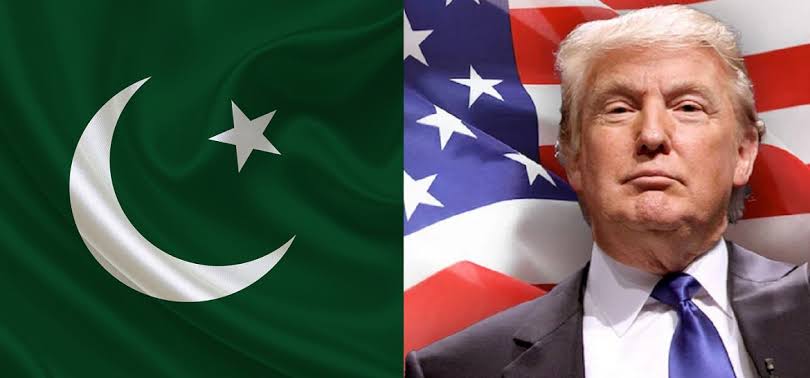
Under Trump 2.0, a significant shift has also been noticed in Washington’s approach with Islamabad. It has renewed its engagement with Pakistan, and has once again, introduced the ‘hyphenation’- treating India and Pakistan as equal strategic variables instead of acknowledging India's structural advantages. Only recently, and much to New Delhi’s dismay, General Asim Munir was hosted by Washington twice in a span of two months which showcases the revived interest of the U.S. in Pakistan’s military leadership. Pakistan also used American platforms to voice its threats against India, in context of the Operation Sindoor. One must also note that Pakistan has to bear a significantly lower tariff i.e. 19%, which is significantly lower than India’s 50%, indicating the differentiated treatment by the U.S.A. It is not the concern of this report to understand the causes behind such differentiated treatment, but it should be understood that Trump 2.0 reflects a strategic shift in the security calculus of America.
Given the recent developments in U.S.–Pakistan relations, important questions arise as to how Pakistan will navigate emerging challenges in the Indo-Pacific. Will Islamabad recalibrate its outlook and engage with the Indo-Pacific framework with reduced apprehension, or will it continue aligning closely with Beijing in response to Washington’s regional vision? If Pakistan does shift, how might Washington interpret and respond to such realignments? Conversely, if Pakistan maintains its current posture, how would China perceive the renewed U.S.–Pakistan engagement, and in what manner would Pakistan balance its ties with both major powers? Furthermore, how might India reassess its strategic cooperation with the United States under a scenario of closer U.S.–Pakistan alignment, and could this open new avenues of convergence between India and China? The answers to these questions are yet to unfold.
Annie Pruthi is a PhD scholar at the Department of Political Science, University of Delhi. The views expressed in the above piece are personal and solely those of the author. They do not necessarily reflect the views of Kalinga Institute of Indo-Pacific Studies.

KIIPS is a premiere think-tank that intends to provide a platform to academics, researchers, scholars and experts from across the country and abroad.