
By Prof. Chintamani Mahapatra
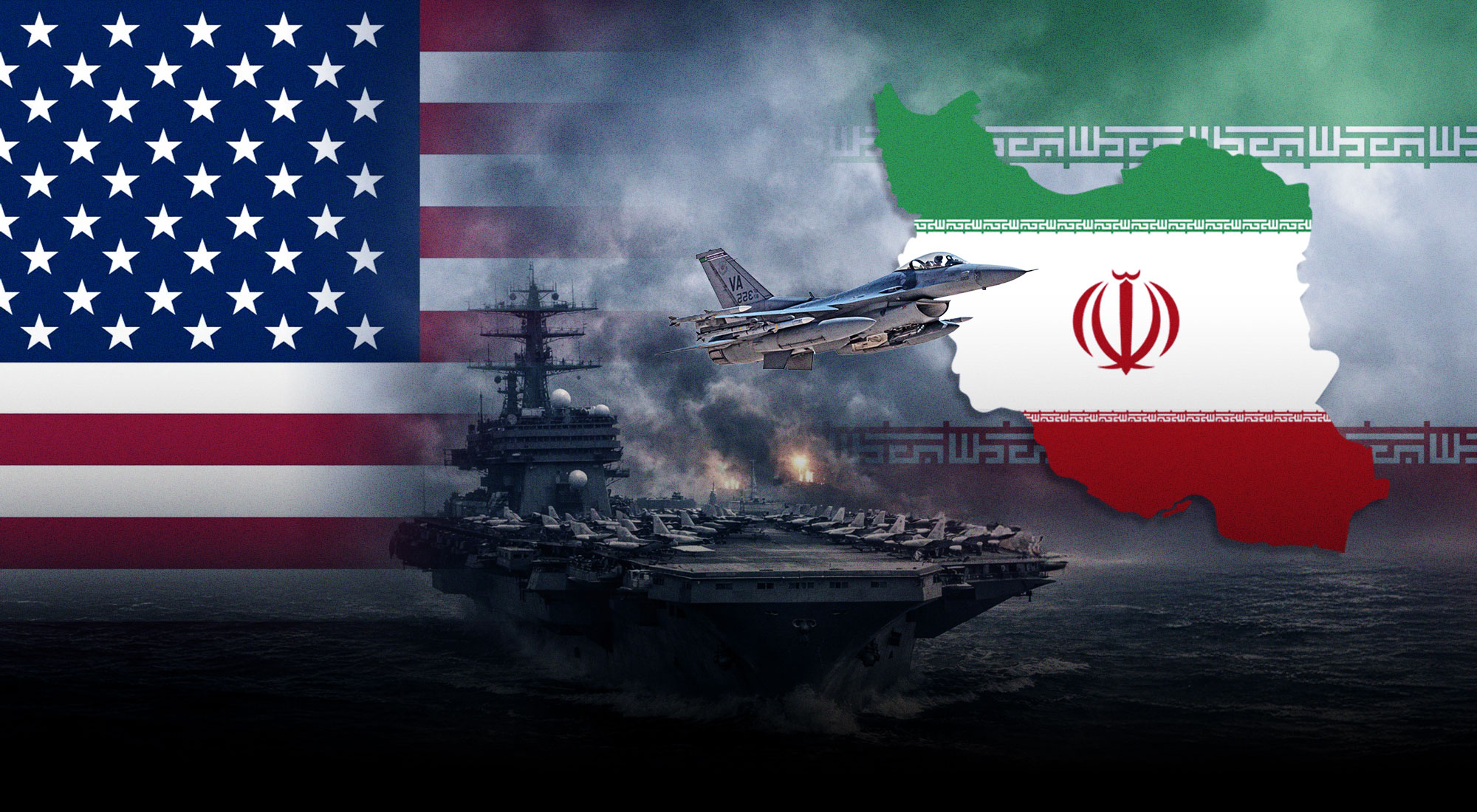
The current world order will not remain the same after the current war of the U.S. and Israel against Iran comes to an end. While the U.S. has fought numerous wars, the outcome of all those wars have never been a clear and decisive victory for the United States, particularly the wars fought after the end of the Second World War.
Take for example, the war in the Korean Peninsula that the United States fought under the UN flag for over three years against North Korea. The U.S. did not lose the war, but it also did not win the war. Communist North Korea, though remaining isolated for long from the mainstream international relations, today has emerged as a de facto nuclear weapon power and possesses the missile that can reach the continental United States.
The war in Indo-China, fought for over nineteen years, ended with the victory of the communist forces, withdrawal of the U.S. troops from the region and establishment of Communist rule in all the three countries of the region—Vietnam, Laos and Cambodia. Today, these three countries continue to be ruled by the communist parties and the U.S. has been seeking to develop positive relations with the People’s Republic of Vietnam.
Nearer to the contemporary era, the U.S.-led NATO forces fought a war against the Taliban forces in Afghanistan for over two decades, yet it ended with the return of the Taliban rule in Kabul. While the U.S. has abandoned Afghanistan for the second time, the Taliban government has been successful in maintaining ties with Russia, China, India and many other countries despite facing the issue of non-recognition.
What happens to Iran after the war is a speculative question and there can be many scenarios of the future of Iran. If the Iranian regime survives, as it appears to be the case now, this will constitute another example of failure of U.S. muscular approach to regime change in Asia. Iranian military capability is certainly diminished after massive bombings of military infrastructure by the American and Israeli air powers. But Iran’s capability to disrupt energy supply, stability and peace in the Persian Gulf and, by implication, to threaten the global political economy, has survived the colossal bombings by a global superpower along with a superpower of the region.
The post-Iran war scenario will almost surely be marked by a further strengthened Israel in West Asia. But the strategic losses of the United States are quite discernible. The Trump Administration has failed in changing the governance structure in Iran, in safeguarding the territorial integrity of its allies in the Persian Gulf, in keeping the energy market stable and secure or even in “obliterating” the nuclear programme and missile and drone arsenals of Iran. On the other hand, Iran has successfully weaponized its geography by preventing freedom of navigation through the Strait of Hormuz.
The refusal of the NATO powers, especially Italy, France, Spain, Germany and the United Kingdom and Asian allies, such as Japan and South Korea to positively respond to the request of President Donald Trump to join the war against Iran is a signature development in the emerging strategic scenario. The nature, quality and depth of the U.S.-led alliances in the post-Iran War era will weaken substantially and shape a new world order.
It needs to be underlined that in the post-Cold War era, only the U.S.-led alliances have survived and some of them have expanded, such as the North Atlantic Treaty Organization. No other powerful country has established any credible military alliance. It is quite likely that even the U.S.-led alliance system will develop cracks that will push further the geopolitical trend towards a stronger multipolar world order.
There are some who believe that there may be a new Cold War 2.0 after the current war in West Asia between the United States and China. But the term “Cold War 2.0” is inappropriate and the chances of such a phenomenon occurring are remote. There is no doubt that many countries have begun to perceive the United States as a disrupter of international order and China as a stabilizer. At the moment, it appears so because of President Trump’s imperial ambitions and theatrics. But China has shown no interest in countering President Trump’s imperial ambitions and it does not have the ability or the credibility to play a global role of the kind the United States plays. What may happen in the near future is fierce competition between China and the United States in the sphere of trade and investment and in the realm of technology and innovation.
Russia, which has returned as an ace geopolitical actor and has sustained its war against Ukraine in the face of Western pressures, sanctions and diplomatic and military support to Ukraine, is one of the beneficiaries of the Iran War. It is most likely that the economic decline that Russia has earned due to its military adventure into Ukraine will not allow it to be a superpower in the foreseeable future. It will be, however, the most powerful swing state in the fast-shifting balance of power between the United States and China.
It is unlikely that Russia and China will combine their strength to counter the United States through a Cold War-type alliance. Moscow and Beijing may compete to manage their ties with the U.S. In this kind of scenario, what kind of role India plays will contribute to global stability. A non-aligned India stayed away from the superpower Cold War in the past. But a multi-aligned India will promote a multilateral order to prevent big power confrontation. India’s strategic partnership will always be based on its strategic autonomy. The EU member countries are now increasingly seeking to develop strategic autonomy. India-EU relations and India-ASEAN ties will be crucial to promote a multilateral world order. India’s diplomacy in BRICS and SCO too will be geared towards backing multilateralism.
*The writer is founder chairperson, Kalinga Institute of Indo-Pacific Studies, and Editor, India Quarterly. Views expressed in the above piece are personal and solely those of the author.
Thumbnail Credit: https://trendsresearch.org/insight/the-multi-front-us-iran-war-and-its-worldwide-implications/?srsltid=AfmBOornvHWO25iyPQLE3r3EqmXE9a1ECAkF4mGDayKfpxPbPfS3vOFl

KIIPS is a premiere think-tank that intends to provide a platform to academics, researchers, scholars and experts from across the country and abroad.